Does Bird Proofing Affect Your Solar Panel Warranty?
A well-fitted mesh system uses clips, not drilling, so your panel warranty is not affected. Here is why the fitting method matters.
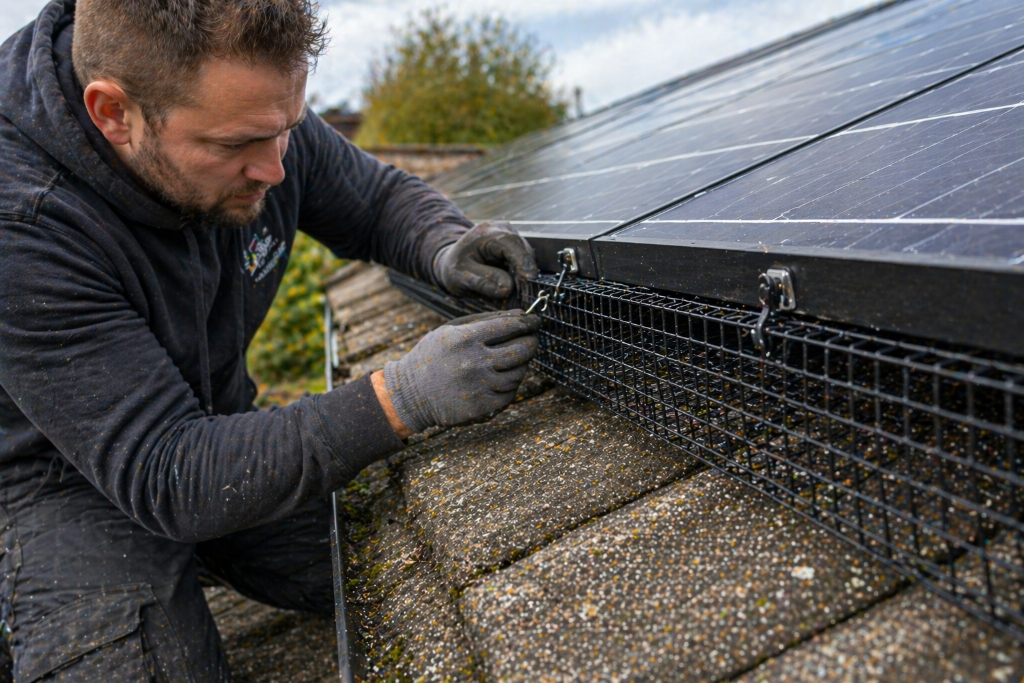
Table of contents
A common and entirely reasonable worry is whether having bird proofing fitted will affect your solar panel warranty. The good news is that, done properly, it does not have to. The key is the fitting method. This article explains why a non-invasive mesh-and-clip system keeps your warranty intact — and what to avoid.
Why the fitting method matters
Solar panel warranties are written with certain assumptions about how the panels are treated. The manufacturers are concerned about anything that physically alters or stresses the panel — drilling into the frame, gluing to the glass, or fitting components that trap heat or block ventilation. Each of those can give a manufacturer grounds to decline a future warranty claim.
A bird-proofing system that simply clips onto the existing frame does none of these things. It does not pierce the panel, does not bond to the glass, and does not seal the array in a way that prevents cooling. Because nothing about the panel itself is changed, there is normally no reason for the warranty to be affected.
How clip-fitted mesh works
The mesh is held in place by specialist clips that grip the edge of the panel frame. These clips are designed for exactly this purpose — they are strong enough to hold the mesh securely in wind and weather, but they do not require any drilling, screws or adhesive on the panel itself. The result is a barrier that is firmly attached yet entirely reversible.
This is the standard, widely-accepted method used by specialist bird proofers across the UK, and it is the method we use on every installation.
What to avoid
Some older or cheaper approaches can put a warranty at risk:
- Drilling into the frame to fix mesh or spikes — this is the most common warranty concern and is unnecessary with modern clip systems.
- Bonding mesh or sealant to the glass — adhesives on the panel surface can be a problem.
- Modifying the roof structure to accommodate mesh — this is rarely needed and best avoided.
If a quote involves any of these, it is worth asking why, and whether a non-invasive alternative is possible.
Checking your own warranty
Every warranty is slightly different, so it always makes sense to read your own panel manufacturer's terms. Most modern warranties are written in plain English and cover installation and modification in a dedicated section. If you are unsure, it is perfectly reasonable to check with the company that installed your panels before having any roof work done — but for clip-fitted mesh, the answer is almost always that it is fine.
You can also ask any bird-proofing installer to confirm in writing that their method is non-invasive and does not involve drilling. A reputable specialist will be happy to do so.
The wider benefit of non-invasive fitting
As well as protecting your warranty, a non-invasive fit protects your roof. No tiles are drilled, no felt is pierced, and the array can be lifted or serviced in the future without the mesh getting in the way. It is simply the right way to do the job.
Key Takeaways
- ✓The fitting method, not the mesh itself, determines the warranty risk.
- ✓Clip-fitted mesh attaches to the frame without drilling or adhesive.
- ✓Avoid any method that drills into the frame or bonds to the glass.
- ✓Always read your own warranty terms, but non-invasive mesh is widely accepted.
- ✓Ask your installer to confirm their method is non-invasive.
- ✓Want a warranty-safe, no-drilling installation? [Get your free quote](/instant-guide) or check the [areas we cover](/areas).
Last updated: 19 July 2026
Frequently Asked Questions
Are pigeons nesting beneath your solar panels?
Contact Worcestershire Solar Bird Proofing for friendly advice and a no-obligation quotation. Permanent, warranty-safe protection from your local specialist.
10-year workmanship guarantee · Fully insured · No drilling, no scaffolding
Related Articles
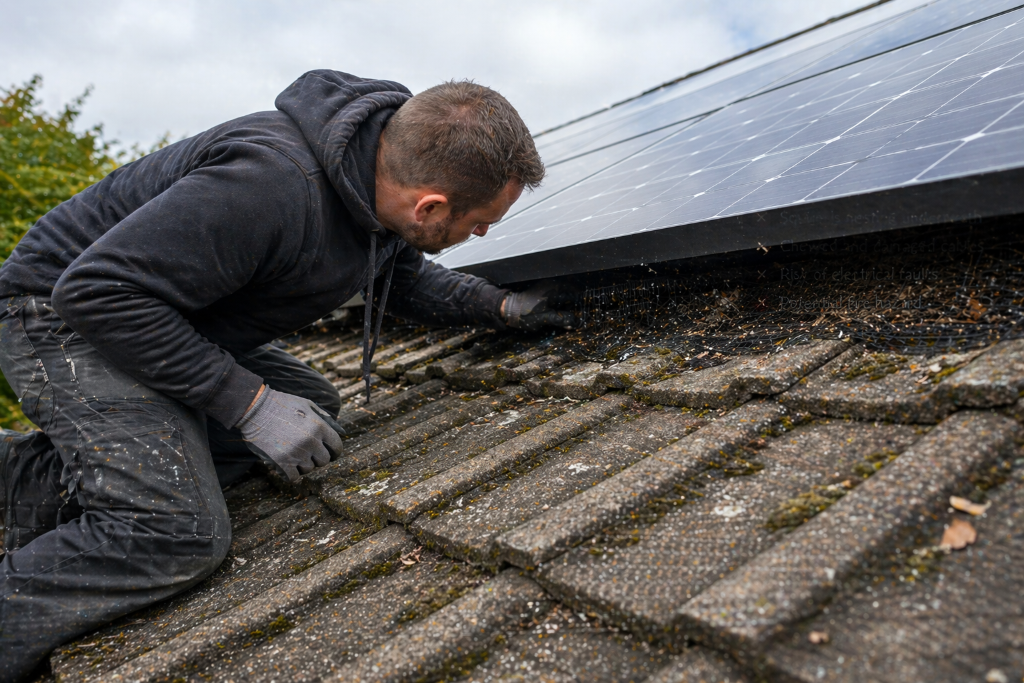
Solar Panel Mesh vs Bird Spikes: Which Is Better?
Mesh and spikes both work, but they solve different problems. Here is a balanced comparison and why the right answer depends on where birds are gaining access.
Solar Panel Pigeon Proofing in Worcestershire: A Homeowner's Guide
A homeowner's guide to solar panel pigeon proofing across Worcester, Droitwich, Malvern, Redditch, Bromsgrove, Kidderminster, Evesham and surrounding areas.
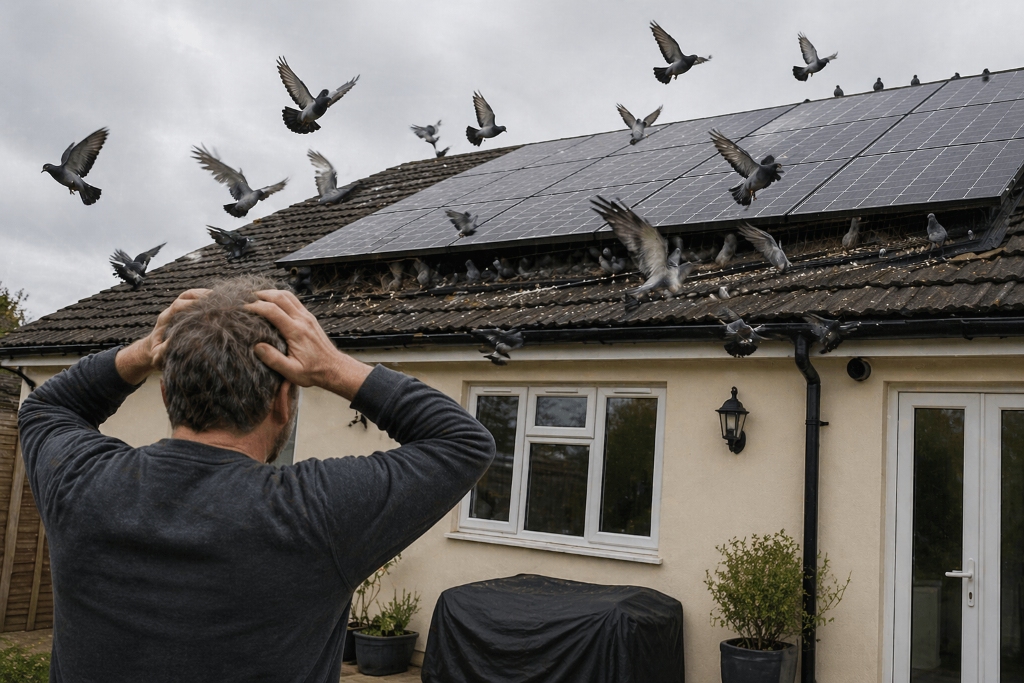
Why Pigeons Keep Returning to Solar Panels
Pigeons keep coming back because the space under your panels is warm, sheltered and high up. Clearing the mess alone is not enough — here is why.