Can Pigeons Damage Solar Panels?
Pigeons under solar panels cause fouling, blocked gutters and debris build-up. Here is what the real risks are — and what is sometimes overstated.
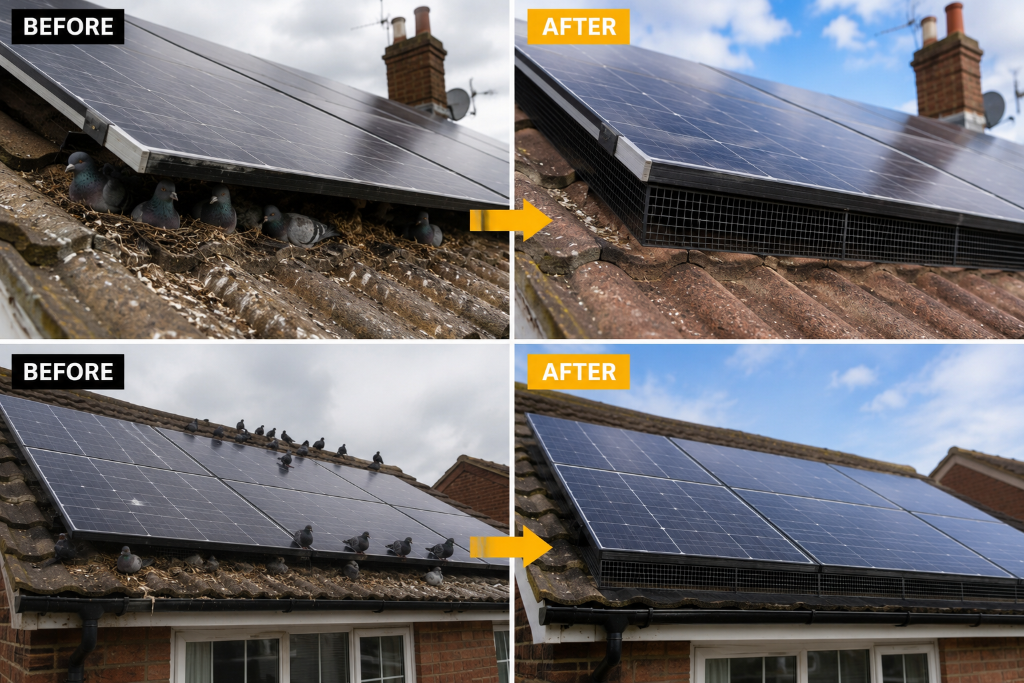
Table of contents
It is a question we are asked a lot, and the honest answer is: pigeons rarely break solar panels, but they can cause a range of real problems that are well worth avoiding. Rather than repeat the more dramatic claims you may have read online, this article looks at what the realistic risks actually are — and which ones are sometimes overstated.
Fouling on the panel surface
Pigeon droppings are acidic and, when they build up on the glass, they reduce the amount of light reaching the solar cells. Over time this can mean a small drop in generation. The effect is usually gradual rather than sudden, and a proper professional clean will generally restore the panel's output. So while fouling does not damage the panel itself, it can cost you a little in lost generation until it is cleaned.
Nesting debris under the array
This is the most common real-world issue. A pigeon nest is not a tidy affair — it is a pile of twigs, grass, bits of plastic and feathers. As it grows, material spills out from under the panels and can end up:
- Blocking gutters and downpipes
- Collecting on flat roofs or conservatory glazing below
- Washing into valleys and causing damp patches
Debris build-up is unsightly and can lead to gutter maintenance bills if left for long enough.
Blocked gutters and water damage
When nesting material and feathers wash into gutters they form blockages. The knock-on effect is water overflowing where it should not, which over time can stain render, dampen fascia boards and, in worst cases, contribute to damp. None of this is a direct fault of the panels themselves, but it is a genuine consequence of pigeons nesting on the roof.
Cable and wiring concerns
Pigeons do not gnaw through wiring in the way rodents do, so dramatic claims about birds chewing through cables are usually overdone. The more realistic concern is that birds shuffling around a tight space, plus the weight of nesting material pressing on cables, can over time dislodge or expose a connection. If your monitoring shows a sudden drop on one string of panels, a dislodged connector under the array is one of the things worth checking.
Ventilation and cooling
Solar panels are designed to be cooled by air flowing beneath them. A large, dense nest can restrict that airflow in one area. The practical impact is usually modest, but keeping the space beneath the array clear is part of helping the system perform as intended over the long term.
What is sometimes overstated
It is worth being balanced. Pigeons will not normally smash a panel, set fire to your home, or instantly halve your generation. The realistic problems are mess, smell, gutter blockages and the gradual, cumulative effect of fouling and debris. None of these are catastrophic, but they are all genuinely unpleasant and avoidable — which is why bird proofing is worth doing.
Key Takeaways
- ✓Fouling on the glass can reduce generation slightly until the panels are cleaned.
- ✓Nesting debris commonly blocks gutters and causes water to overflow.
- ✓Cable damage from chewing is rare; dislodged connections are the more realistic worry.
- ✓Dense nests can restrict the airflow that helps cool the panels.
- ✓The problems are real but gradual — and entirely avoidable with proofing.
- ✓If pigeons are causing any of these issues, [get a free quote](/instant-guide) or see the [areas we cover](/areas).
Last updated: 19 July 2026
Frequently Asked Questions
Are pigeons nesting beneath your solar panels?
Contact Worcestershire Solar Bird Proofing for friendly advice and a no-obligation quotation. Permanent, warranty-safe protection from your local specialist.
10-year workmanship guarantee · Fully insured · No drilling, no scaffolding
Related Articles
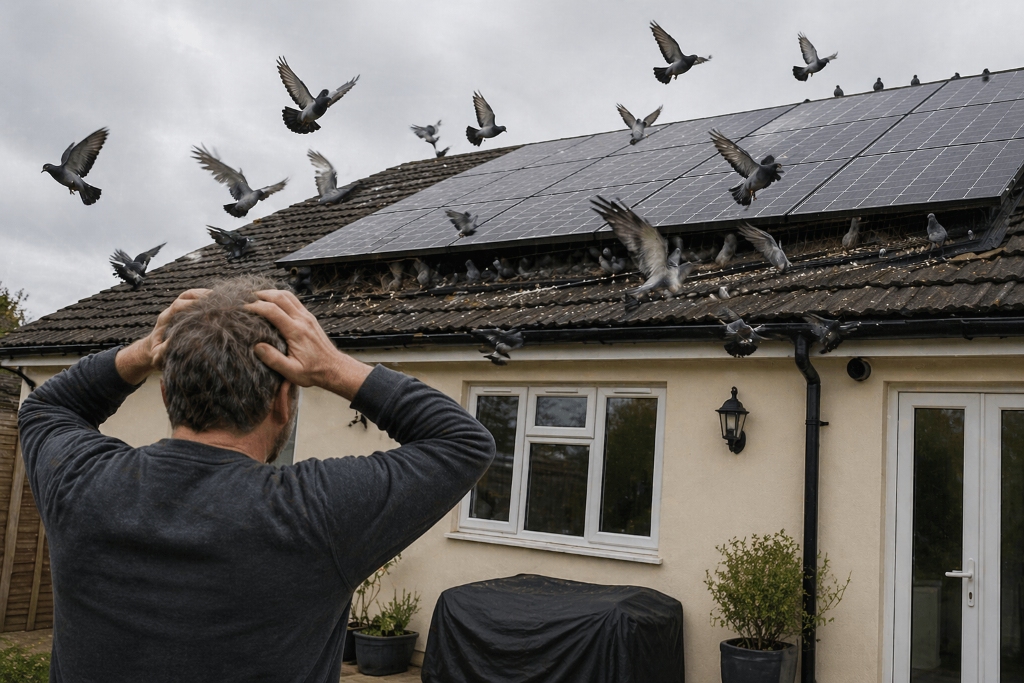
Why Pigeons Keep Returning to Solar Panels
Pigeons keep coming back because the space under your panels is warm, sheltered and high up. Clearing the mess alone is not enough — here is why.
Signs You Have Pigeons Nesting Under Your Solar Panels
Noises, nesting material, droppings and blocked gutters are all warning signs. Here is how to tell if pigeons are nesting under your solar panels.
Solar Panel Pigeon Proofing in Worcestershire: A Homeowner's Guide
A homeowner's guide to solar panel pigeon proofing across Worcester, Droitwich, Malvern, Redditch, Bromsgrove, Kidderminster, Evesham and surrounding areas.